
Skip to content

Molecular Geobiology

  • Home
  • Research
  • Projects
  • Team
  • Values
  • Facilities
  • Publications
  • Join us
  • Contact
15. October 202515. October 2025 felixelling

New project on quinones

We have been awarded funding for a collaborative research project with the Université Grenoble-Alpes, France through a collaboration between the DFG and the French Research Agency (ANR). We will characterize new biosynthetic pathways of quinones and will study how quinone biosynthetic pathways evolved across the tree of life. More information can be found here: https://kiel-geobiology.de/tolquin/

1. October 202515. September 2025 felixelling

New group member

Unyime Umoh joins the group as a postdoctoral fellow, funded by the Alexander-von-Humboldt Foundation. He will work on the export mechanisms of planktonic archaeal biomass.

15. September 2025 felixelling

Geoff Eglinton Award

Felix was awarded the Geoff Eglinton Award by the European Association of Organic Geochemists at #IMOG2025. https://imogconference.org/the-geoff-eglinton-presentation/

3. March 2025 felixelling

Radio interview

Felix was interviewed on RBB radioeins on the evolution of aerobic respiration. Check out a recording of the interview here (German language only): https://www.radioeins.de/programm/sendungen/die_profis/archivierte_sendungen/beitraege/sauerstoff-atmung-hat-sich-frueher-entwickelt-als-gedacht.html

3. March 20253. March 2025 felixelling

New publication

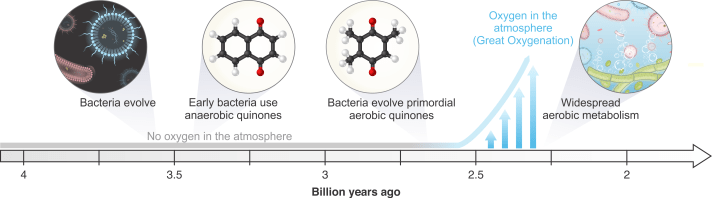
A timeline of bacterial evolution showing the evolution of quinones used by bacteria for aerobic respiration before the great oxygenation event

Just published in PNAS: Our discovery of a novel type of quinone in Nitrospirota. We describe its biosynthetic pathway and show that the quinones used in aerobic respiration likely evolved before the great oxygenation event. Check out this article by the Harvard Gazette: https://news.harvard.edu/gazette/story/2025/02/hinting-at-answer-to-a-chicken-or-egg-question-on-evolution/

10. October 202414. October 2024 felixelling

New preprint available

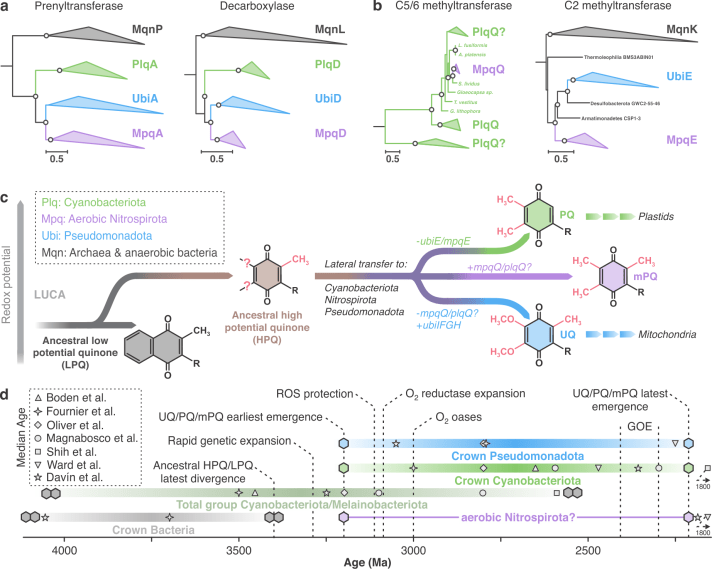
A screenshot of a scientific article showing the evolution of respiratory quinones in Nitrospirota

We describe the discovery of a novel type of respiratory quinone in bacteria of the phylum Nitrospirota and its implications for the evolution of aerobic metabolisms: https://www.biorxiv.org/content/10.1101/2024.07.27.605408v1

10. October 202414. October 2024 felixelling

New group member

A photo of Wenyong Yao showing a man with short black hair

Wenyong Yao joins the group as our third PhD student. He will work on characterizing the archaeal lipidome.

21. September 202314. October 2024 felixelling

New PETM project

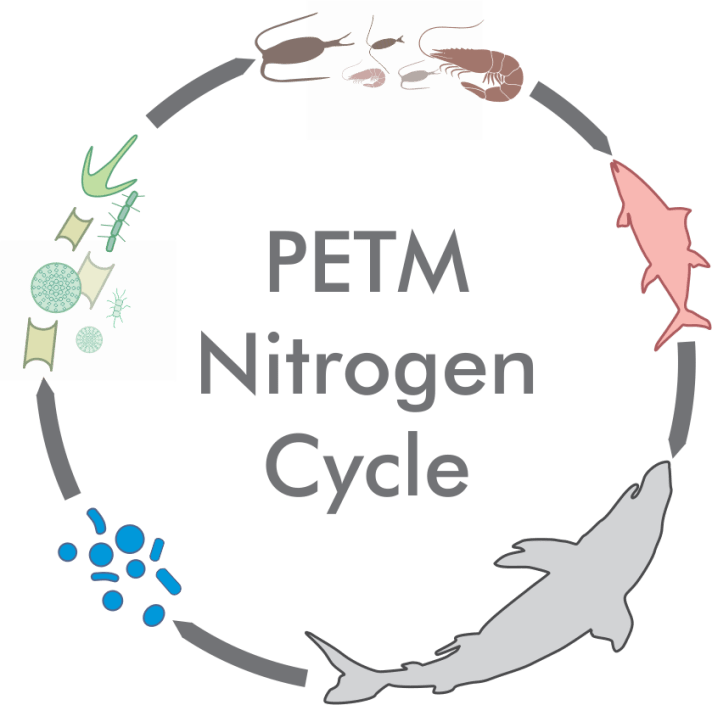
A logo for a research project on the PETM nitrogen cycle, showing a schematic trophic food chain in a circle

We have started our new project on the impact of climate change during the Paleocene-Eocene Thermal Maximum on the marine nitrogen cycle, which was recently funded through the DFG IODP priority program. More details can be found in the projects section.

13. March 202313. March 2023 felixelling

New publication

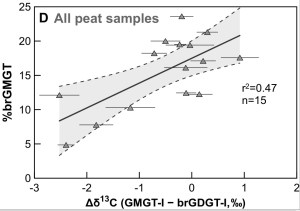
We have a new publication in Organic Geochemistry showing that the brGMGT ‘orphan’ lipids found abundantly in soil are produced by heterotrophic bacteria distinct from those producing brGDGTs: Heterotrophic origin and diverse sources of branched glycerol monoalkyl glycerol tetraethers (brGMGTs) in peats and lignites.

15. September 202214. October 2024 felixelling

New group member

A photo of Xiaoxiao Zhao showing a woman with long black hair

Xiaoxiao Zhao joins the group as our second PhD student. She will work on reconstructing the nitrogen cycle during the PETM.

Posts navigation

Older posts

About the Molecular Geobiology group

The molecular geobiology group at Kiel University studies organic molecules in modern and ancient microbes. We combine expertise from organic (bio)geochemistry, geomicrobiology, and molecular biology to study how and why microbes produce organic molecules (such as lipids, pigments, and co-factors) and to learn what the rock record of these molecules can tell us about earth’s climatic and geochemical evolution. Our main analytical tools are lipidomics via liquid chromatography-mass spectrometry, compound-specific stable isotope analysis, experimental microbiology, and phylogenetic analyses.

Impressum Datenschutzerklärung

Create a website or blog at WordPress.com
  • Subscribe Subscribed
    • Molecular Geobiology
    • Already have a WordPress.com account? Log in now.
    • Molecular Geobiology
    • Subscribe Subscribed
    • Sign up
    • Log in
    • Report this content
    • View site in Reader
    • Manage subscriptions
    • Collapse this bar
 

Loading Comments...